
Speakers
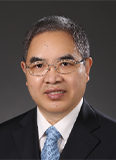
| Prof. Xinnian Wang Dalian Maritime University, ChinaBiography: Xinnian Wang is currently a professor/PHD Advisor at Dalian Maritime University. He now is the director of both the program of Electronic Information Science and Technology and the joint EE program between DMU and UH. He also serves as the Chair of Dalian Chapter of China Computer Federation (CCF), and is a council member and a distinguished member of CCF. His research interests cover digital image processing, pattern recognition, and biometrics. He especially focuses on footprint biometrics, finger vein recognition and machine vision systems. He has published more than 30 papers in refereed journals and proceedings in the areas of computer vision and pattern recognition. He holds forty invention patents and has over 30 under reviewing patents, and many of his inventions have been shipped to products and services. He has been supported by the National High Technology Research and Development Program and ministerial level programs, and he has also led over 20 successfully-delivered industrial projects. He has gained one First Class Prize of Science and Technology Progress Award of Dalian City and one Second Class Prize of Science and Technology Progress Award of Liaoning Province. Title: Automatic Footprint Recognition Abstract: Footprints carry many important human characteristics, such as anatomical structures of the foot, skin texture on the foot sole, and the habitual characteristics of standing or walking, which are stable and unique for a person. They play vital roles in forensic investigations. Automatic footprint recognition as an emerging biometric technology is still in its infancy. In this report, I will introduce key technologies and challenges involved in footprint biometrics, and will also introduce some of our progress in footprint identification and shoeprint retrieval, which provide useful implications for improving the performance of other biometrics as well. |

| Prof. Tian Bai Biography: Tian Bai is a Professor with the school of computer science and technology at Jilin University. He received a joint Ph.D. degree from Jilin University and The State University of New Jersey. His research interest lies in the fields of Cognitive Computing, Natural Language Processing, Computer Vision, and Intelligent Healthcare. In these fields, he has published over 30 papers in top-tier conferences and journals, such as Expert Systems with Applications、Bioinformatics, and BIBM. He currently serves as the Chairman of Changchun Young Computer Scientists & Engineers Forum (YOCSEF), the Deputy Secretary General of the CCF Technical Committee of Computer Applications, and a reviewer for authoritative journals in multiple fields, such as TKDE, Bioinformatics, BIB, and JBHI. Title: Multimodal medical resources analysis and research Abstract: As patients with cancer traverse diagnostic, treatment and monitoring processes, physicians custom a series of medical tests across different modalities to guide clinical diagnosis. A significant opportunity emerges to aggregate, integrate and analyse these digital medical resources to discover multimodal prognostic features, learning from the collective history of large number of patients. In this report, we mainly introduce our researches using unimodal medical data, focusing on such as structured knowledge extraction, annotation limitation, privacy protection. |

| Assoc. Prof. Pavel Loskot IEEE Senior Member Zhejiang University-University of Illinois at Urbana-Champaign Institute (ZJUI), China Biography: Pavel Loskot joined the ZJU-UIUC Institute in January 2021 as the Associate Professor after being nearly 14 years with Swansea University in the UK. He received his PhD degree in Wireless Communications from the University of Alberta in Canada, and the MSc and BSc degrees in Radioelectronics and Biomedical Electronics, respectively, from the Czech Technical University of Prague in the Czech Republic. He is the Senior Member of the IEEE, Fellow of the Higher Education Academy in the UK, and the Recognized Research Supervisor of the UK Council for Graduate Education. His current research interest focuses on problems involving statistical signal processing and importing methods from Telecommunication Engineering and Computer Science to other disciplines in order to improve the efficiency and the information power of system modeling and analysis. Title: Deep Learning Architectures for Time-Series Data Abstract: There are currently many efforts to devise deep learning architectures that would be effective for univariate as well as multivariate time-series data. The deep learning models that turned out to be very effective for text, images, and other multimedia processing tasks such as convolutional neural networks and transformers are not performing so well when they are used for time-series data. Even recursive neural networks and long-short term memory models do not perform better than classical and much simpler auto-regressive models that have used extensively in signal processing applications for decades. However, since about 2020, new deep learning architectures started to appear that can be considered to be state-of-the art, and importantly, which can outperform all other previously used methods by capturing long and complex dependencies in longitudinal data. This talk will outline these new machine learning architectures, and discuss the key components and techniques used to overcome limitations of the vanilla deep learning architectures. |

| Researcher Bei Li Changchun Institute of Optics, Fine Mechanics and Physics (CIOMP), China Biography: Bei Li is the professor at Changchun Institute of Optics, Fine Mechanics and Physics, CAS and the CEO of HOOKE Instruments Ltd. He obtained a Ph. D degree in photonics from University of Bristol, UK in 2009. As a senior researcher at University of Oxford, he worked on the research and application of optical microscopy in the research group on dynamic optics and photonics during 2014-2017. In the past five years, he has undertaken and participated in over 20 national and provincial-level research projects. He has published more than 50 papers in journals such as Environmental Science and Technology, Nanoscale Horizons, mLife, and Talanta, and has filed over 40 patent applications, with 26 patents granted. At present, his main research fields are single cell precise sorting technology, Raman spectroscopy applied in life science, and development and application of optical imaging technologies. His team covers optics, mechanical control, software development, artificial intelligence, and other multi-disciplinary fields, with the ability to solve various complex problems. Title: Single Cell Research Meets Raman Spectroscopy and Laser-induced Forward Transfer Abstract: Single cell research is an emerging field of biology which offers new opportunities for understanding phenotypic heterogeneity in isogenic cell population. However, there are a great many of challenges, such as non-invasive cell analysis and in situ single cell sorting from complex samples, in front of single cell biotechnology. Raman spectroscopy provides a non-invasive, label-free approach to cell identification and cell ejection based on laser-induced forward transfer (LIFT) which has advantages of precise isolation, wild applications and high accuracy. Nevertheless, the spectral resolution and detection speed of Raman spectroscopy need to be improved in order to meet the demand of cell discrimination; and in-depth systematic research of bio-compatibility of thin-layer media, laser effects on biological samples, laser beam shape control and spatial resolution in LIFT systems is required for diverse single cell sorting from various complex samples. In this article, we establishing a new-type single cell sorter by combining a rapid Raman identified cell module with high spectra resolution and a high throughput cell ejection module with good bio-compatibility and broad suitability for separation of different types of cells. We had successfully recognized and isolated a series of single bacteria and mammalian cell from seawater, soil, blood and tissue. To combine with single cell sequencing could build the relationship between cell phenotype and genotype, that is to link cell functions to certain gene. It will uncover fundamental biological mechanisms which will surely bring significant breakthroughs in all branches of life sciences and bio-medicine. |

Inviting & Updating*